

Have you got the book hierarchy blues?
Sitting in our office today I hear our gun publications strategist and our leading book designer in what is a routine Green Hill discussion.
STRATEGIST – “Do we need to talk about the book hierarchy?”
DESIGNER – “Yes, there’s a problem.”
STRATEGIST – “We need to advise the author about the issues. It won’t work in print will it?”
DESIGNER – “No. His editor seems a little inexperienced.”
Are the strategist and designer trying to make life difficult for the author and his editor? No, they are trying to produce a winning book.
Most first time authors are unaware of the complexities of making a winning book. The issue of hierarchy is all about how information is structured so that the reader has the best chance of absorbing and understanding the information.
 The chart at right shows how a business might be organised – how staff relate to each other and how the human resources are organised. Written information can be organised in the same manner. This is often expressed in a book Contents.
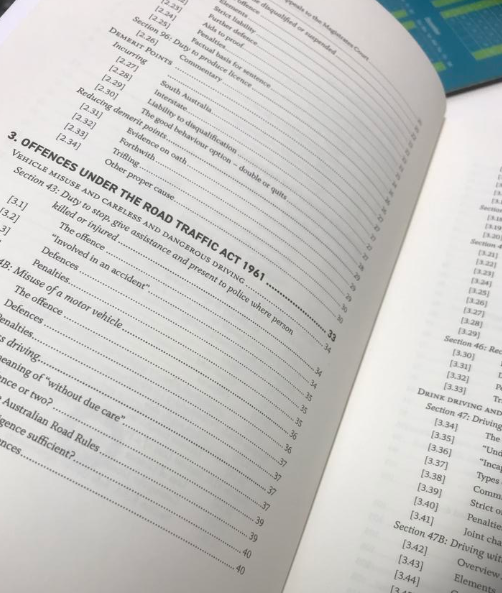
The Contents page – Edward Stratton-Smith’s complex hierarchy for his excellent book Traffic Offences.
But hierarchy usually runs deeper than just the chapters shown on a Contents page.
There can headings, subheadings, lists/bullet points, and breakouts/text in boxes and margins. A big issue is how ‘deep’ the information is organised and how ‘wide’. Often an author structures the information too deep, so deep the reader forgets what the context of the information being presented is, what the focus of the chapter is, and/or what the author’s lesson or argument is. Confusion is the result. An experienced editor will know what to do.
When book hierarchy is appropriate, good book design will follow.