

What is a metaphor for?

What is a metaphor for?

Stepehn wales Unbreakable self-published author

This book cover uses metaphor

What is a metaphor? Metaphors are undoubtedly a master communication tool and use in book publishing is no exception.

A metaphor can be described as:  a figure of speech that describes an object or action in a way that isn’t literally true, but helps explain an idea or make a comparison. https://www.grammarly.com/blog/metaphor/

‘Heart of stone’ and ‘heart of gold’ are two common ones. These present images that convey quite complex abstract concepts. Instead of saying ‘he is a very good person with good motives’ we say he has a ‘heart of gold’.  The first is long-winded, ‘heart of gold’ is interesting and colourful.
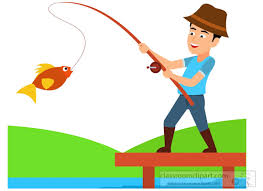
The fisherman book cover

A boring cover image for a boring book

Its not just about words – metaphors are a good cover design technique.

Some of the best book cover designs we have accomplished use metaphor. This avoids the book publisher’s curse – trying to convince authors not adopt a book cover with literal imagery. One author wanted this image on their book called The Fisherman – this was a literal title. Guess what the book was about? It was about a fisherman. The fisherman went to the river and fished for fish. The cover (according to the author ) needed to have a picture of a man fishing i.e. a fisherman. The result – boring, boring, boring!

When we conduct a creative brief where you the author and we, the book designer discuss how the cover design will play out –  it will pay for you to think about the designer using metaphor.


Here’s a little more from Grammarly:

  • metaphor states that one thing is another thing
  • It equates those two things not because they actually are the same, but for the sake of comparison or symbolism
  • If you take a metaphor literally, it will probably sound very strange (are there actually any sheep, black or otherwise, in your family?)
  • Metaphors are used in poetry, literature, and anytime someone wants to add some colour to their language

The democratisation of publishing.

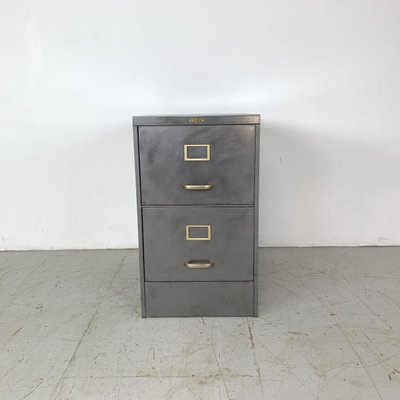
Filing cabinetAfter graduating I started my career in a research unit within a government bureaucracy. My very first task was to undertake qualitative research—a series of interviews with 20 industry participants—and distill the findings and formulate recommendations for action.

In six weeks I had finished the document. I had gathered a lot of information, undertaken analysis, and wrote a report that I thought was both readable, rich in intel and hopefully actionable.

I asked my supervisor what was to be done with the report? I’ll never forget his answer: ‘put it in the filing cabinet’. To say I was disillusioned was an understatement. In the filing cabinet it stayed for at least the several years I worked there, periodically revisited only by its melancholy author. These visits were like laying flowers at the grave of a young friend.

What motivated me to start a publishing company?

The seed of my publishing company was planted the same day I buried my report in that filing cabinet. My research and my ideas had no voice. In modern parlance I had been ‘de-platformed’.

Serhii Plokhy’s book Chernobyl – History of a Tragedy documents people of the Soviet era struggling for voice:

Yaroshinskaya was reduced to distributing copies of her article to her friends. In the era of glasnost, she had no choice but to return to samizdat—the practice, perfected by Soviet dissidents of the previous era, of copying prohibited texts on private typewriters and circulating copies among friends and acquaintances.

Yaroshinskava’s text told of the Soviet authorities bungled response to one of the world’s greatest ecological disasters. De-platformed, she laboriously retyped her text—I hope she had access to carbon paper. In this light it’s encouraging to think that today anyone can find voice online or in print. Publishing has been democratised. Democratisation means making something accessible to everyone— anyone can get published. Whether it’s those with theories, ideas or stories, everyone gets to have a voice.

Decades later my staff, associates and I run a busy, growing publishing company. We are capable of taking any content, shaping it, displaying it and distributing it to its intended readership.

Book publishing has It’s returned to where it all started

For much of the 20th century the publishing industry was hierarchical, multi-layered and dominated by large publishing juggernauts. There were writers, editors, agents, brokers, designers, printers, promoters, sellers and resellers, wholesalers, retailers, and a labyrinth of other roles—too many to mention.

Today that complex hierarchy remains. It’s more concentrated than ever with as few as four big consortiums controlling most of the global market.

But the good news is, as always: new technology has disrupted the industry. Today new players can quickly get traction and participate in publishing.

The invention of the printing press is known as one of the greatest inventions to shape modern civilisation. In 1444, Johannes Gutenberg devised movable metal type. He was the world’s first self-publisher of significance. There was little hierarchy and little industrial and institutional distance between Guttenberg and his readers.

The gap between content creator and reader has flattened yet again.

An opportunity for creators of content

Today digital print-on-demand, drop shipping, and online marketing has smashed barriers to entry into the publishing industry. This means the ever-popular and influential print book can be easily produced and delivered into the hands of readers. And then there’s the beautiful and revolutionary eBook.

Never before has publishing been in such a state of flux. Right now there’s so much opportunity for creators of quality content to strengthen their voice.

REFERENCES

Serhii Plokhy, Chernobyl – History of A Tragedy Penguin Random House UK 2018 pg 310

Avoid self-publishing’s #1 pitfall: Quality

Avoid self-publishing’s #1 pitfall: Quality

Quality starts with you the author. How good is your writing and is what you are writing about wanting to be read? But there are two other key factors.

The cornerstone of the traditional publishing industry is good quality content. Publishers take good quality content and wrap it in good design. The title is then placed within their well-developed marketing system.

Let’s first define “traditional publishing”. Traditional publishing is where a publisher pays you for the right to publish your work. The author needs to present their manuscript to a publisher and then negotiate a fee that the publisher will pay for use of that content. If a contract is reached it’s invariably because the publisher has assessed the quality of the manuscript as high.

A high-quality manuscript increases the chance that the book will sell and the publisher will make a nice profit (and so will you).

Traditional publishing companies – at least the successful ones – can spot a quality book and pre-empt if it will appeal to readers and if it is likely to sell well.

A literary agent works for you to find a publisher to bring your book to market. Things are so competitive that you first need to convince the literary agent to take you on. Then they need to represent your work to publishers (oft times after editing). This is a lengthy process.

Sometimes authors can go directly to publishers with samples of their writing. This is quicker than going through a literary agent. A key is selecting a publisher where your work and the genre they are most successful in publishing have good fit. But know this – many publishing houses will refuse “un-agented” manuscripts. Manuscripts that have already gone through an agent are of a higher quality (if the agent is doing their job well). Often agents will require you to have the book edited before they are prepared to present your work to a publisher.

When a manuscript arrives within a traditional publishing house, a process of quality assessment begins. This starts with the decision of the publishing company to read the manuscript. Many manuscripts don’t get read because the genre of the book is not one the publisher is familiar with or has been successful with. Or it can depend on the reputation of the literary agent placing the manuscript.

If all goes well a senior editor in the publishing company may refer the manuscript to a junior editor or editorial assistant. The assistant will make an early recommendation about how well the book will suit publishing.

The process of using an agent and having a publishing company take you on, brings with it its own process of quality control.

As a self-publisher, you can get into print without any quality control whatsoever. And that’s a problem. If you ’re expecting your title to go viral you better have a damn good book!

There are two simple things you can do to improve quality:

  1. Green Hill can refer you to an expert editor to help your work become a better book. Editors can’t work miracles but they are often worth every cent invested.
  2. Green Hill’s standard publishing package comes with high-end book cover design. So many self-published authors unnecessarily design their own book cover and many of these designs simply kill any potential the book had of succeeding. You often need to put your cover design ideas to the side and get a skilled graphic designer with fresh eyes to design for you.